Central Nervous System Tumours
- Non-invasive treatment, no general anaesthetic or incision.
- Treatment of inoperable tumours (reaches areas where surgery cannot).
- Improvement in disease control.
- Fewer and more effective sessions.
- Improved preservation of cognitive function.
- Limits radiation in healthy brain tissue
- Adapts to the tumour.
- Safer re-irradiation possible.
more information
Central Nervous System Tumours
- Non-invasive treatment, no general anaesthetic or incision.
- Treatment of inoperable tumours (reaches areas where surgery cannot).
- Improvement in disease control.
- Fewer and more effective sessions.
- Improved preservation of cognitive function.
- Limits radiation in healthy brain tissue
- Adapts to the tumour.
- Safer re-irradiation possible.
more information
Tumours of the head and neck
- Alternative to surgery, no marks or scars
- Preservation of function: voice preservation
- Improvement in disease control
- Symptom control in advanced disease
- More effective treatment in a shorter time
- Treatment zone adjustment
- Adapts to the tumour and the patient
- √ Safer re-irradiation
more information
Tumours of the head and neck
- Alternative to surgery, no marks or scars
- Preservation of function: voice preservation
- Improvement in disease control
- Symptom control in advanced disease
- More effective treatment in a shorter time
- Treatment zone adjustment
- Adapts to the tumour and the patient
- √ Safer re-irradiation
more information
Lung Cancer
- Ideal treatment for inoperable tumours
- Helps control pain or breathing difficulty.
- Less radiation to healthy tissue, helps to maintain respiratory capacity
- Reduced side effects.
- It breathes with you, in synchronisation with respiratory movement, during the session.
- Fewer days (sessions) of treatment.
- Greater comfort during the session.
more information
Lung Cancer
- Ideal treatment for inoperable tumours
- Helps control pain or breathing difficulty.
- Less radiation to healthy tissue, helps to maintain respiratory capacity
- Reduced side effects.
- It breathes with you, in synchronisation with respiratory movement, during the session.
- Fewer days (sessions) of treatment.
- Greater comfort during the session.
more information
Breast cancer
- Indicated in the majority of cases.
- Non-invasive treatment, no anaesthetic.
- Reduces the risk of recurrence after conservative surgery.
- Helps to control symptoms.
- Delivery of a more uniform, homogeneous dose.
- Higher precision.
- Fewer side effects.
- Adapts to the tumour.
more information
Hepatobiliary and pancreatic tumours
- Non-invasive curative treatment.
- Alternative in tumours where other treatments have been ruled out.
- Enables surgery, in some cases.
- Improves pain caused by the tumour.
- Synchronisation with tumour motion.
- Reduction in side effects.
- Shorter treatments.
- Safer re-irradiation in recurrent disease.
more information
Hepatobiliary and pancreatic tumours
- Non-invasive curative treatment.
- Alternative in tumours where other treatments have been ruled out.
- Enables surgery, in some cases.
- Improves pain caused by the tumour.
- Synchronisation with tumour motion.
- Reduction in side effects.
- Shorter treatments.
- Safer re-irradiation in recurrent disease.
more information
Gastrointestinal tumours
- Treatment of choice in anal tumours.
- Improvement in likelihood of sphincter-preserving surgery (to prevent the need for colostomy) in rectal tumours.
- In advanced stages it is fundamental for disease control.
- Helps with symptom control (bleeding or pain).
- Reduction in side effects.
- Adapts to changes in the tumour.
more information
Gastrointestinal tumours
- Treatment of choice in anal tumours.
- Improvement in likelihood of sphincter-preserving surgery (to prevent the need for colostomy) in rectal tumours.
- In advanced stages it is fundamental for disease control.
- Helps with symptom control (bleeding or pain).
- Reduction in side effects.
- Adapts to changes in the tumour.
more information
Prostate Cancer
- Curative treatment, non-invasive alternative to surgery.
- Improved preservation of sexual function.
- Improved maintenance of urinary continence.
- Safe rescue treatment, after surgery.
- Our radiotherapy.
- Synchronisation with tumour motion. Safer and more precise
- It affects a smaller area of the bladder.
- Reduced side effects.
- Fewer, more effective sessions.
- More comfortable for the patient.
more information
Genitourinary tumours
- Non-invasive, pain-free treatment, alternative to surgery.
- Helps to control the disease.
- Bladder preservation (avoids a stoma bag).
- Helps to control symptoms such as pain or bleeding when passing urine.
- Higher precision and safety.
- The bladder volume (amount of urine) and rectal volume (faecal or gas content) have less effect.
- Shorter Shorter (fewer sessions) and effective treatments.
- More comfortable for the patient.
more information
Genitourinary tumours
- Non-invasive, pain-free treatment, alternative to surgery.
- Helps to control the disease.
- Bladder preservation (avoids a stoma bag).
- Helps to control symptoms such as pain or bleeding when passing urine.
- Higher precision and safety.
- The bladder volume (amount of urine) and rectal volume (faecal or gas content) have less effect.
- Shorter Shorter (fewer sessions) and effective treatments.
- More comfortable for the patient.
more information
Gynaecological Tumours
- Treatment of choice for inoperable advanced tumours.
- Reduced risk of locoregional recurrence after surgery.
- Symptom control (bleeding or pain).
- Safer and more precise.
- The bladder volume (amount of urine) and rectal volume (faecal or gas content) have less effect.
- Fewer side effects.
- More comfortable for the patient.
- Safer re-irradiation.
more information
Haematological tumours
- Good and rapid response to treatment.
- Enables treatment of different areas at the same time, including total-body irradiation (TBI).
- Improvement in symptom control (bone pain with or without soft tissue mass).
- Adapts to changes in tumour volume and the patient's anatomy
- Fewer side effects.
- More comfortable for the patient.
more information
Metastasis
- Non-invasive, pain-free treatment.
- Better symptom control, improving quality of life
- In select cases, elimination of the disease, even if already disseminated.
- Short treatment (fewer sessions), well tolerated.
- Fewer, more effective sessions.
- Adapts to changes in the tumour and/or patient.
- Fewer side effects.
more information
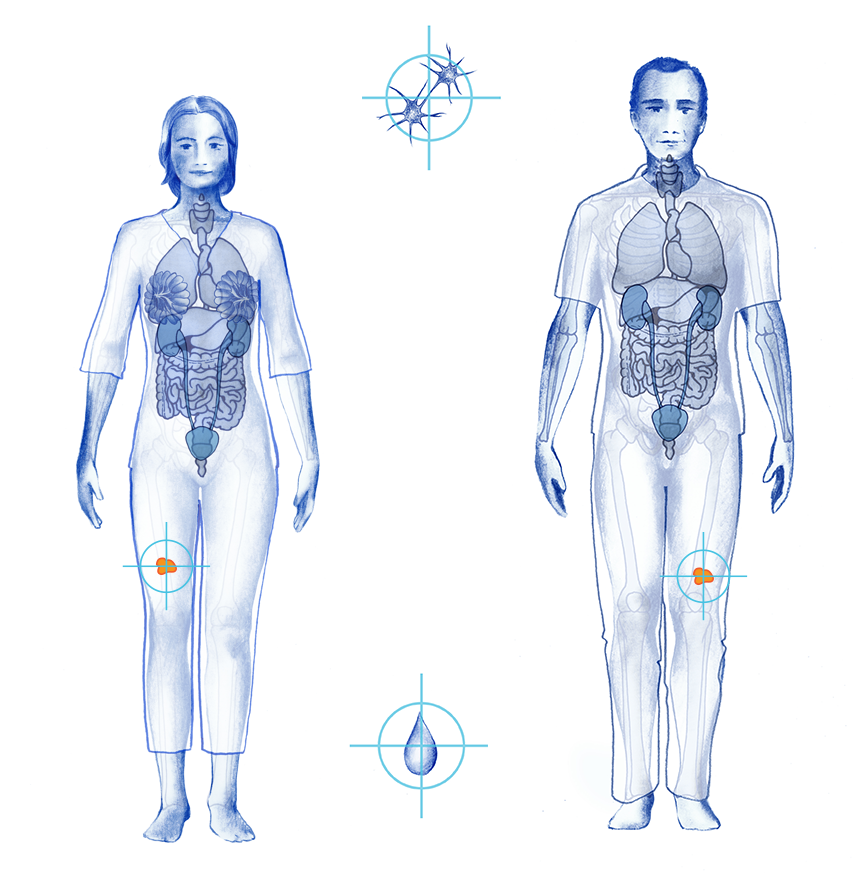
Sarcoma
- Non-invasive, pain-free treatment.
- Improvement in local disease control and survival.
- Facilitates surgery.
- Prevention of traumatic surgery (amputation).
- Well tolerated, allows normal daily life during treatment.
- Adapts to changes in the tumour and/or the patient.
more information
Sarcoma
- Non-invasive, pain-free treatment.
- Improvement in local disease control and survival.
- Facilitates surgery.
- Prevention of traumatic surgery (amputation).
- Well tolerated, allows normal daily life during treatment.
- Adapts to changes in the tumour and/or the patient.
more information