


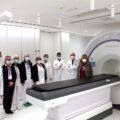
La alcaldesa Ángeles Muñoz visita las obras de HC Cancer Center
La alcaldesa, Ángeles Muñoz, ha visitado esta mañana las obras de ampliación del nuevo centro oncológico de HC Marbella que albergará la Unidad de Radioterapia innovadora. [Weiterlesen]


La alcaldesa, Ángeles Muñoz, ha visitado esta mañana las obras de ampliación del nuevo centro oncológico de HC Marbella que albergará la Unidad de Radioterapia innovadora. [Weiterlesen]
Breast cancer is the most common in women in both developed and developing countries. [Weiterlesen]
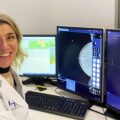
Thanks to this technique, a 3D mammography scan can be performed and the entire breast can be seen in a three-dimensional way, as if it were a CT scan. [Weiterlesen]
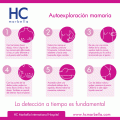
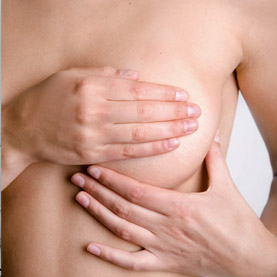 3 Schritte, die Leben retten.
Oktober ist der Monat des Kampfes gegen Brustkrebs. In HC Marbella möchten wir alle Frauen dazu ermutigen, diese Untersuchung in ihre alltägliche Rutine zu integrieren, denn dies ist ein Maßnahme für die Früherkennung von Brustkrebs, die Leben retten kann. Unsere Brustkrebs Spezialiste a HC Marbella beantworten Ihre Fragen zur Brustuntersuchung.
Das Onkologie-Team HC Marbella unter der Leitung von Dr. Hernán Cortés-Funes glaubt, dass es viele Gründe für die Hoffnung im Kampf gegen den Krebs gibt. Wir teilen hier 5 vielversprechende Entwicklungen, welche die Art, wie wir Krebs und seine Behandlungsmöglichkeiten betrachten, verändern.
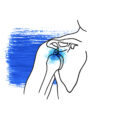
The shoulder is the most mobile joint in our body. It consists of a ball known as the humeral head and a socket known as the glenoid. The high mobility of the shoulder requires a very shallow socket (glenoid). Around the socket there is a bumper (cartilage rim) called labrum which, together with a series of ligaments connecting the ball to the socket, prevent the ball slipping out of joint. These are called static stabilisers of the shoulder joint. On top of these structures there are four muscles called the rotator cuff connecting the scapula (shoulder blade) with the humerus (arm bone) and dynamically stabilising the shoulder when they contract. When the shoulder dislocates the traumatic force overcomes the blocking effect of the stabilisers and the labrum and ligaments can tear if the patient is young. Sometimes the rotator cuff muscles can tear if you are over 40 years of age. The shoulder can dislocate anteriorly (more common) or posteriorly. Shoulder dislocation is an emergency and requires urgent relocation under anaesthesia followed by a sling for 2 weeks and physiotherapy. A clinical examination by a specialised shoulder surgeon is recommended for active patients involved in sports activity.

 According to the Spanish Academy of Dermatology (AEDV) 6000 new cases of melanoma are detected in Spain every year. [Weiterlesen]
Our genes may increase the risk of developing certain types of cancer, such as breast, ovary, colorectal, and prostate cancers. If you have any relatives who have been diagnosed with cancer, the oncologists at HC Marbella, experts in genetics, can help you learn more about the risk of developing a determined cancer. At HC we offer you a genetic assessment with specific genetic tests for different types of cancer, in order to help you make important decisions.
Die frühzeitige Erkennung des Melanoms ist ausschlaggebend, um eine günstige Prognose sicherzustellen.
Die Identifizierung und Entfernung des Melanoms in frühen Stadien stellen eine gute Prognose des Patienten sicher, aber bedürfen einer regelmässigen Nachbehandlung und minuziöser Untersuchungen. Tatsache ist, dass die Überlebensrate im Falle von nicht-invasiven Melanomen bei 90-95% liegt. Bei infiltrierten Formen jedoch, liegt die Sterblichkeitsrate hoch und die Überlebensrate liegt unter 20%, wenn das Melanom sich auf andere Organe ausgebreitet hat.
Most cardio-vascular conditions can be treated today as a minimally invasive endovascular procedure in the cath lab. Instead of an open chest as operating field, the interventional cardiologist uses an artery, most likely the wrist artery, as entrance to our heart vessels. [Weiterlesen]

Radiotherapy, together with chemotherapy and surgery is a fundamental pillar in the treatment of cancer. Over the years, in addition to medical advances, the development of technology has allowed us to perfect radiotherapy techniques, obtaining more precise and effective and safe treatments. [Weiterlesen]
Tel.: +34 952 908 628
+34 609 148 799
952908898 Onkologie
951829978 Bildgebende Diagnostik
951829947 Gynäkologie
952908897 Fertilitäts-Zentrum
951829947 Physiotherapie