
Could it be lymphoma? Feeling a swollen lymph node in the neck, discovering a lump in the armpit, feeling more tired than usual or having a persistent fever often causes immediate concern. Many people come to the clinic with the same question: “Could this be something serious? Could it be lymphoma?”
The reality is that most patients who seek medical advice for these symptoms do not have lymphoma. However, there are certain warning signs that you should be aware of and which warrant a specialist medical assessment.
Five key points to know when to seek medical advice and how a possible lymphoma is investigated
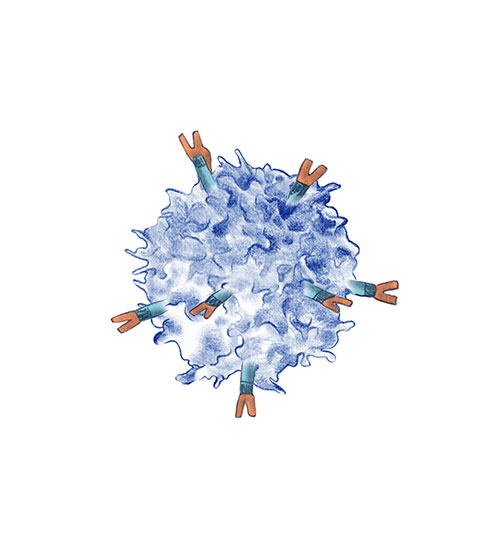
Lymphomas are diseases that originate in lymphocytes, a type of white blood cell that forms part of our immune system and helps our body defend itself against infection and other diseases.
Lymphocytes are predominantly found in the lymph nodes, although they are also present in organs such as the spleen, bone marrow, tonsils or certain areas of the digestive tract.
The term “lymphoma” actually encompasses many different diseases. Generally speaking, there are two main groups: Hodgkin lymphoma and non-Hodgkin lymphoma. Each has different characteristics, clinical course and treatments.
Fortunately, advances in haematology have radically improved the prognosis of these diseases. Highly effective treatments are now available and, in many cases, the chances of long-term control of the disease or even cure are very high.
The most common symptom is the appearance of one or more enlarged lymph nodes.
Patients often describe them as small lumps in the neck, armpits or groin. Sometimes they are discovered by chance while shaving, applying a cream or looking in the mirror.
However, it is important to understand that lymph nodes are part of our immune system and are constantly reacting to infection, inflammation and other benign processes.
For this reason, the presence of an isolated lymph node does not necessarily determine the presence of a haematological disease.
What usually prompts a more thorough examination is when the lymph node:
- Persists for several weeks.
- Gradually increases in size.
- Appears without an obvious cause.
- Is accompanied by other general symptoms.
- Is painless.
B symptoms or general characteristic symptoms that may appear are:
- Unintentional weight loss.
- Heavy night sweats.
- Persistent fever without an identified cause.
- Significant tiredness or lack of energy.
- Generalised itching.
- A feeling of abdominal fullness.
- More frequent infections than usual.
None of these symptoms is exclusive to lymphoma, but when several of them occur repeatedly and persistently, a medical assessment is recommended.
No.
In fact, one of the most important parts of our consultation consists precisely in differentiating which nodes require study and which are part of a normal response of the body.
It is common for enlarged lymph nodes to appear after a respiratory infection, tonsillitis, a dental problem or certain viral infections. In these cases, they tend to gradually decrease in size until they disappear.
Therefore, the discovery of an enlarged lymph node should not be an automatic cause for alarm. What is important is to seek medical advice to assess its evolution, characteristics and the overall clinical context of each patient.
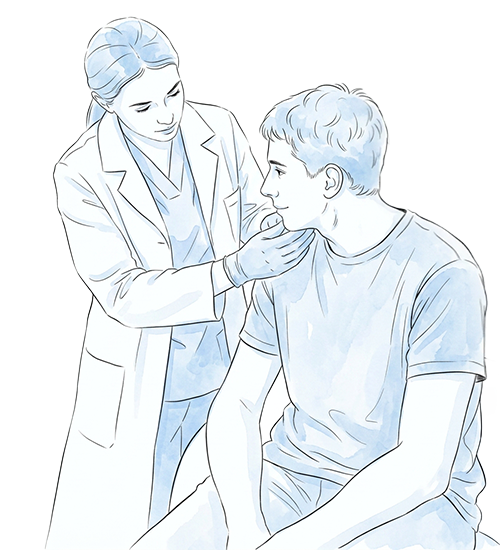
Diagnosis always begins with a detailed clinical history and a comprehensive physical examination.
Subsequently, different tests may be requested, including the following:
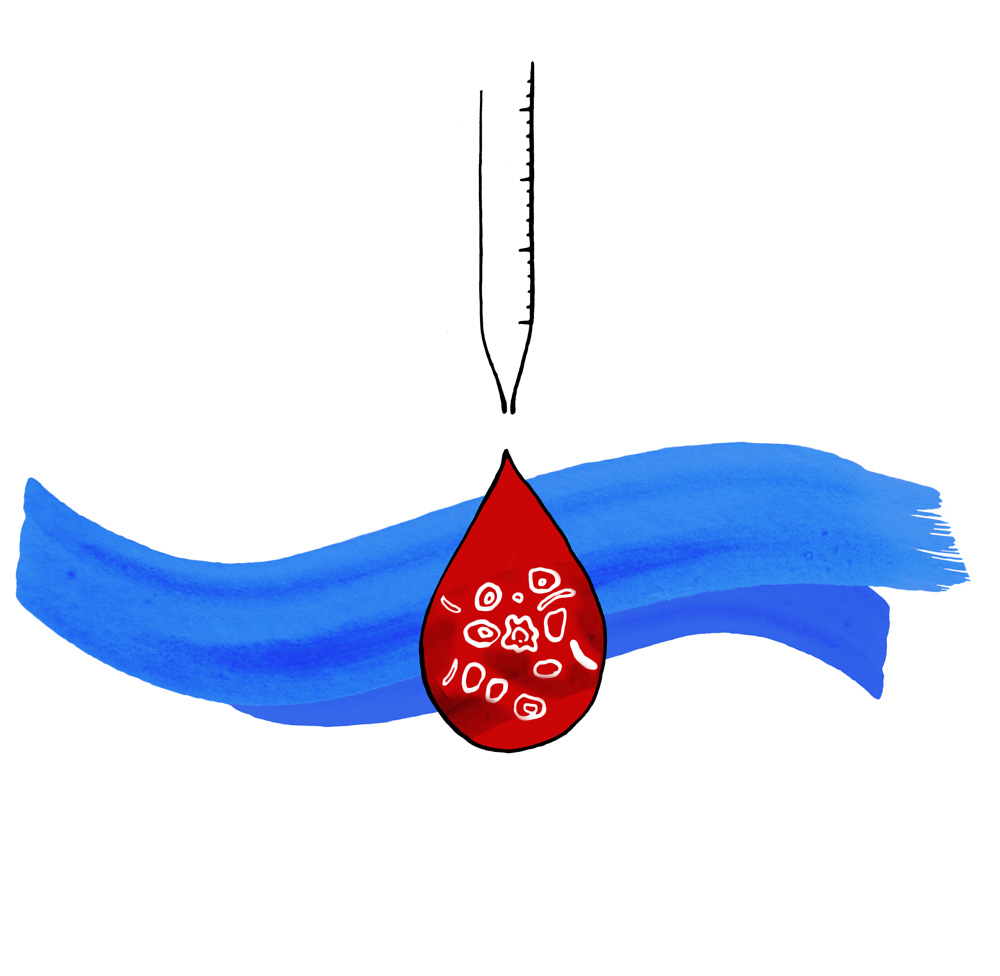
- Blood tests
- Ultrasound of the lymph nodes
- CT Scan
- PET-CT Scan
However, a definitive diagnosis usually requires a biopsy of the affected lymph node or tissue.
The biopsy allows the cells to be studied under a microscope, to identify the exact type of lymphoma and determine the biological, genetic and molecular characteristics that will facilitate the selection of the most appropriate treatment for each patient.
The word “lymphoma” is a cause for concern and it is normal for any enlarged lymph node or persistent symptom to cause alarm. However, it is important to remember that the vast majority of patients who seek medical advice for these reasons do not have lymphoma.
When there is doubt, the best approach is an assessment by a specialist to distinguish benign findings from those cases that genuinely require further investigation.
Book your appointment with our Haematology specialists.
Juni 18, 2026
lesen Sie Nachrichten
Tel.: +34 952 908 628
+34 609 148 799
952908898 Onkologie
951829978 Bildgebende Diagnostik
951829947 Gynäkologie
952908897 Fertilitäts-Zentrum
951829947 Physiotherapie