

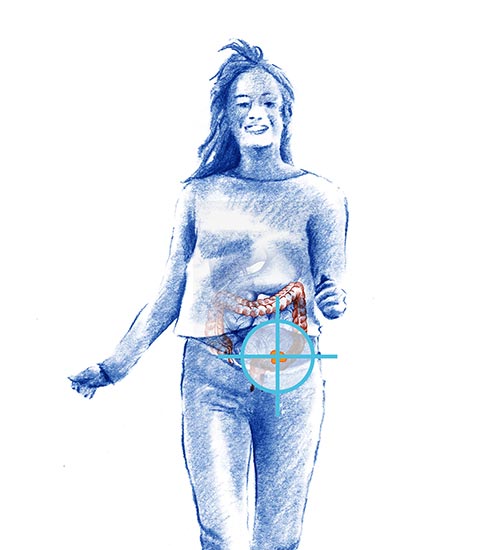
Colorectal cancer is the most frequent tumour affecting both sexes in Spain, with an estimated 44,573 new cases in 2025.
Although mortality has decreased by around 20% in the last two decades, it still represents a major public health problem. The key to further reducing its impact lies in two fundamental pillars: prevention and population screening.
Screening programmes have proven to be one of the most effective strategies for reducing colon cancer mortality.
According to data from the Spanish Society of Medical Oncology (SEOM) and the Spanish Network of Cancer Registries (REDECAN),, mortality has been reduced by approximately 1.2% per year, largely due to early detection.
The faecal occult blood test is a key tool in this regard. It is a simple and accessible test for the early detection of colorectal cancer. Although it does not by itself establish a diagnosis, it can identify warning signs that should be further investigated by colonoscopy.
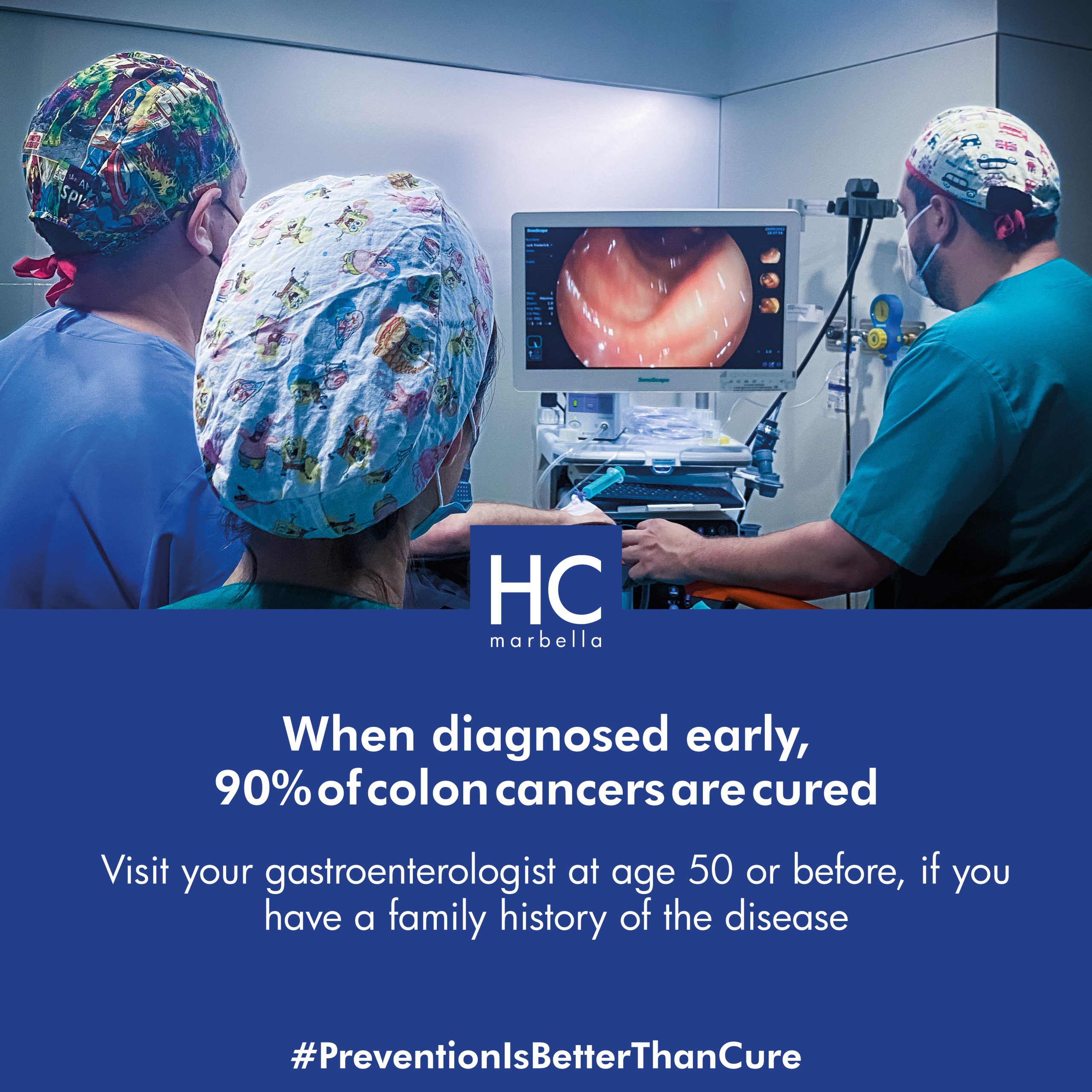
However, participation in these programmes remains insufficient in many regions. Lack of knowledge or awareness means that a significant proportion of the population does not benefit from these preventive tools.
Increasing participation in screening programmes is essential to further reduce the incidence and mortality of colorectal cancer.
In addition to screening, adopting a healthy lifestyle can help reduce the risk of developing colorectal cancer SEOM y REDECAN recommend:
Although these habits do not completely eliminate the risk, they do significantly help to reduce it.
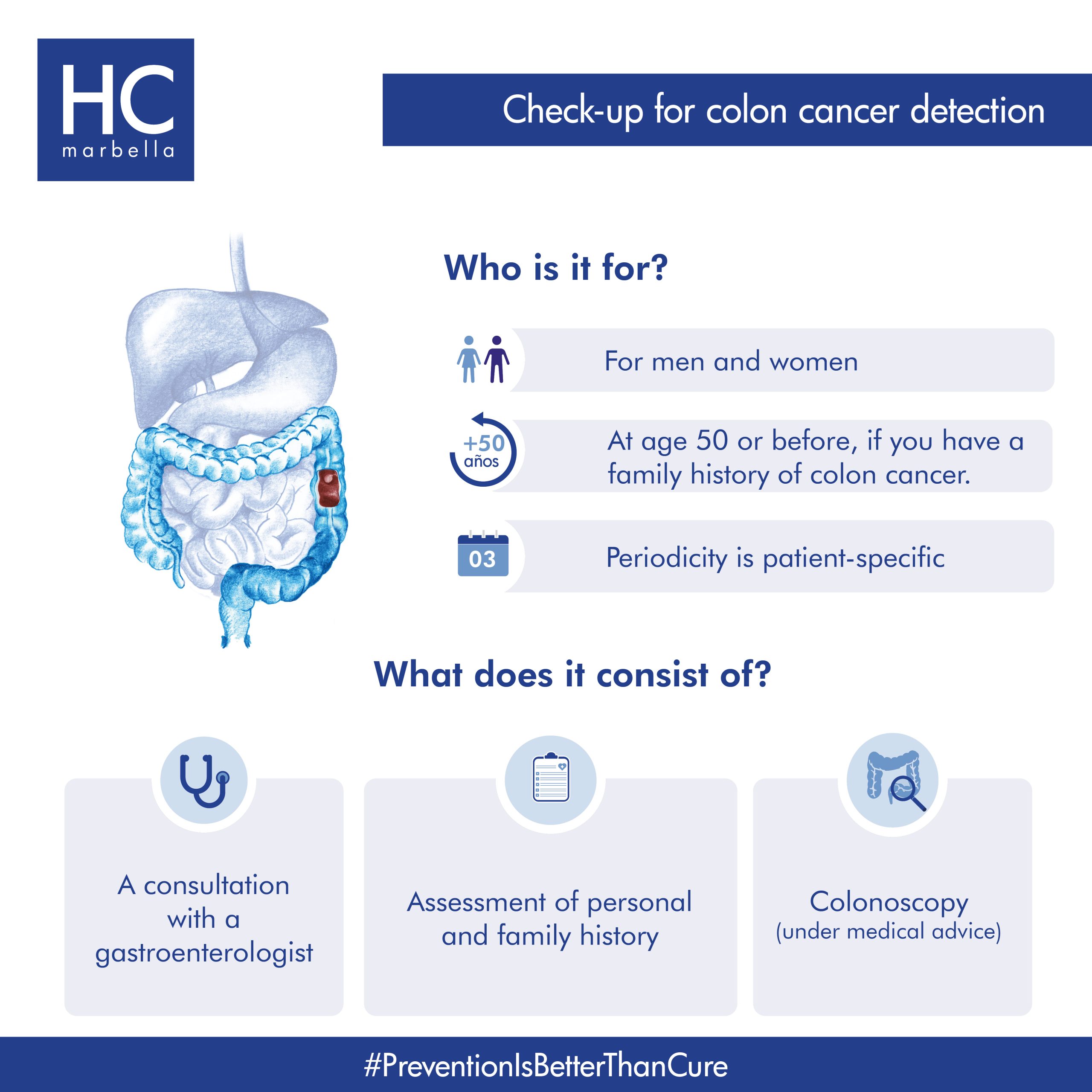
Beyond initial screening, colonoscopy is the most comprehensive test for the examination of the colon.
It allows the visualisation of the interior of the intestine using a flexible endoscope with a camera and also enables the detection and removal of polyps in the same procedure, preventing their development into cancer.
Although the prior preparation may be somewhat uncomfortable, colonoscopy is a safe and well-tolerated technique, performed under sedation for greater patient comfort.
It is recommended:
Early diagnosis: better prognosis, less aggressive treatments
Early detection of colon cancer not only increases the chances of cure, but also allows for less aggressive treatments and better clinical outcomes.
In its initial stages, cure rates can exceed 90%.
At HC Marbella, we are committed to providing comprehensive care in the diagnosis and treatment of colorectal cancer. We have a multidisciplinary team that includes specialists in digestive, oncology, surgery, radiology and nuclear medicine, ensuring a fast and accurate assessment.
In addition, we have state-of-the-art technology, such as PET-CT as well as advanced cancer care, allowing us to offer personalised treatments with the best therapeutic options available.
Colon cancer is one of the few oncological diseases that can be effectively prevented through screening. However, for this to become a reality, it is vital to strengthen screening programmes and raise awareness among the population.
Every person who participates in a screening programme is taking a crucial step for their health. If you are over 50 or have a family history, don’t wait: get tested.
Prevention is the best tool, and at HC Marbella we are here to support you every step of the way on the journey towards good health.
Request your appointment with our gastroenterology team at HC Marbella.
March 23, 2026
Read other news
Tel.: +34 952 908 628
+34 609 148 799
952908898 Oncology
951829978 Diagnosis by imaging
951829947 Gynecology
952908897 Fertility
951829947 Physiotherapy


