
What if it’s not just the menopause? Once they reach the age of 50, many women experience tiredness, weight fluctuations, sleep problems, hot flushes or palpitations. These changes are often attributed directly to the menopause. However, they can also be signs that the thyroid gland is not functioning properly.
The thyroid gland regulates essential functions such as energy, metabolism, body temperature and heart rate. Disorders of the thyroid are particularly common in women: in Spain, around 10% of the adult population shows some evidence of thyroid dysfunction. Furthermore, the menopause and thyroid disease can occur at the same time and share symptoms, making diagnosis more difficult.
Three conditions that may seem similar, but are not the same
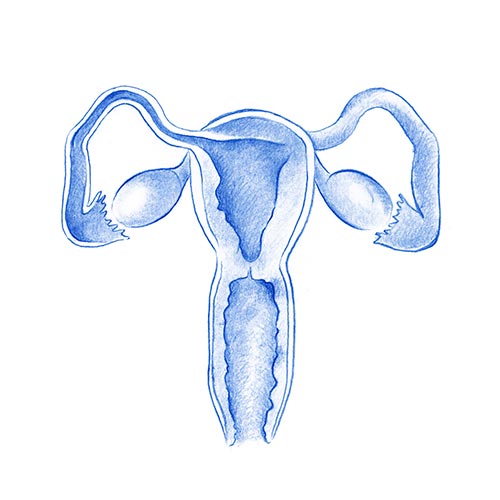
It is a natural stage in which the production of oestrogen and progesterone decreases and menstrual cycles cease.
Most common symptoms: hot flushes, night sweats, sleep disturbances and mood swings.
What happens hormonally? Oestrogen levels decrease and FSH levels may rise. However, in women over the age of 45, the menopause is usually diagnosed based on symptoms and changes in menstruation, without the need for routine hormone testing to confirm it.
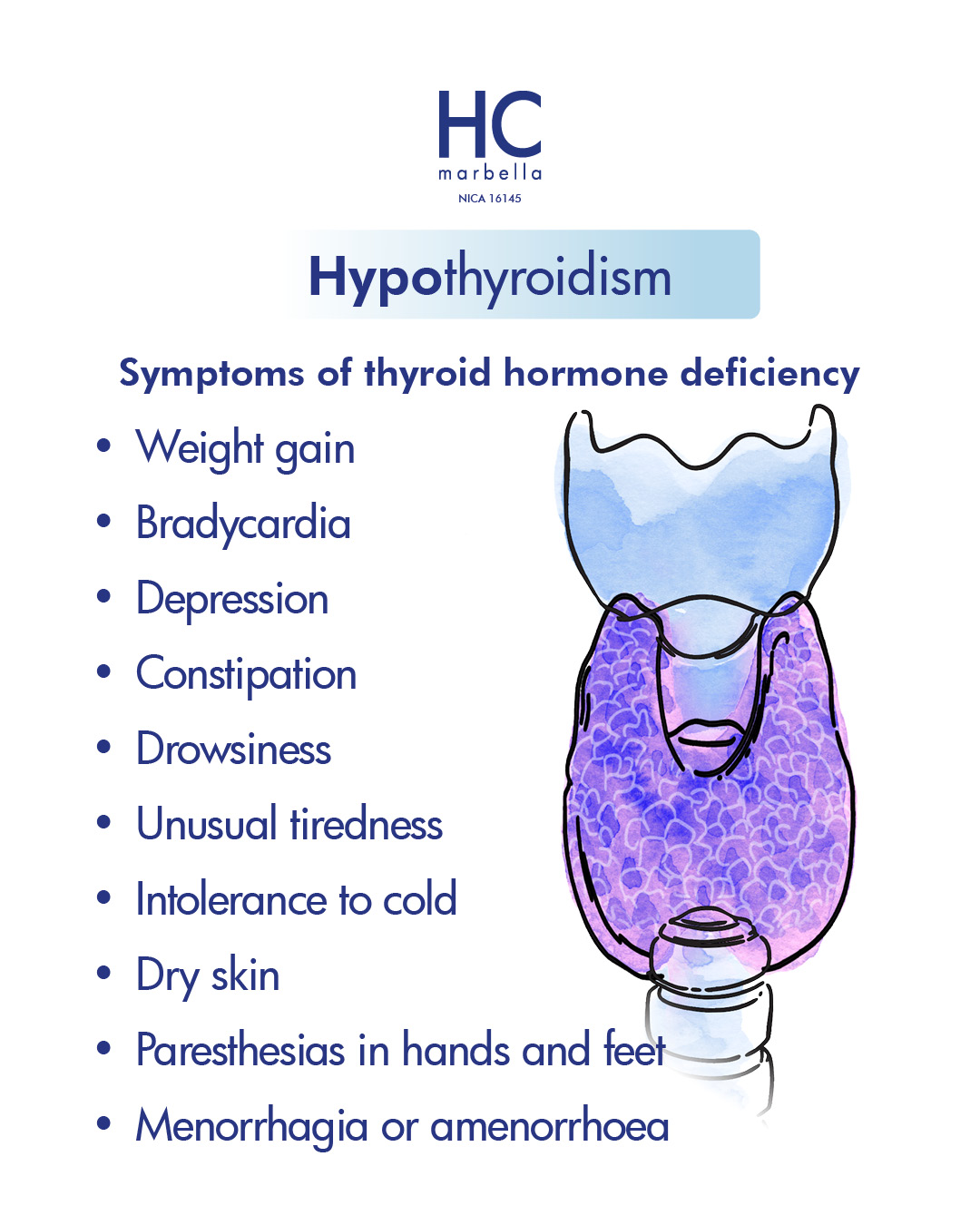
Hypothyroidism occurs when the thyroid does not produce enough hormones. As a result, some bodily functions slow down.
The most common symptoms are persistent tiredness, weight gain, sensitivity to cold, dry skin or constipation.
What happens hormonally?
The thyroid produces less hormone than necessary and the body tries to stimulate it by increasing TSH levels.
How does it usually show up on a blood test?
- High TSH levels.
- Low free T4 levels: this means that the thyroid is not producing enough hormone.
- If the cause is autoimmune, anti-TPO or anti-thyroglobulin antibodies may be detected. These are associated with Hashimoto’s thyroiditis.
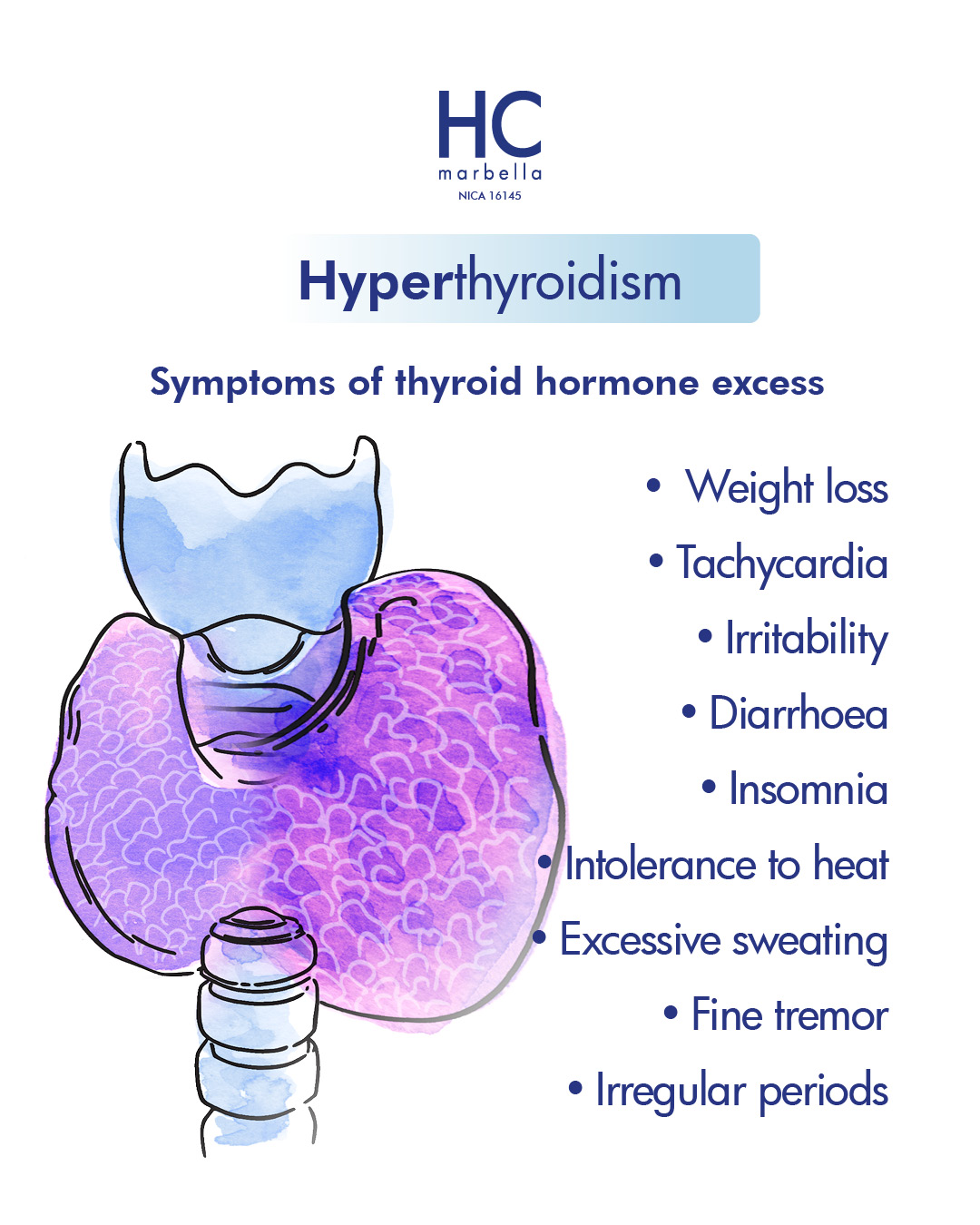
Hyperthyroidism occurs when the thyroid produces more hormones than necessary, causing the body’s functions to speed up.
The most common symptoms are palpitations, sweating, excessive sensitivity to heat, nervousness or weight loss.
What happens hormonally?
There is an excess of thyroid hormones and the body tries to slow down the activity of the gland by lowering TSH levels.
How does it usually show up on a blood test?
- Low TSH levels.
- Elevated free T4 and/or free T3 levels: this means that there is an excess of thyroid hormone.
- In certain autoimmune conditions, such as Graves’ disease, TSH receptor antibodies (TSI) may be elevated.
An untreated thyroid disorder is not just a matter of tiredness or discomfort.
When hyperthyroidism is present, excess thyroid hormone can increase the risk of heart rhythm disturbances. In addition, after the menopause, it may contribute to loss of bone density and increase the risk of osteoporosis and fractures.
In the case of hypothyroidism, if left untreated, it may worsen fatigue, promote changes in cholesterol and increase the impact of other cardiovascular risk factors.
From the age of 50 onwards, it may be a good time to include thyroid health in a preventive assessment, especially if symptoms do not improve, there is a family history of thyroid disease or if nodules or previous abnormalities have been detected previously.
A blood test can help to check how the thyroid is functioning, even when symptoms are unclear or can be confused with the menopause.
In addition, after the age of 50, thyroid nodules occur very commonly and do not usually cause symptoms. Although most of these nodules are benign and of no significance, in some cases they may be malignant in nature. A thyroid ultrasound allows the appearance of the gland to be assessed, helps identify possible nodules and evaluate their appearance and risk of malignancy.
At HC Marbella, the thyroid assessment offers a comprehensive evaluation of the functioning and structure of the thyroid:
- 1. Initial medical consultation: assessment of symptoms, personal medical history, family history and risk factors.
- 2. Comprehensive thyroid blood tests.
- 3. Thyroid ultrasound: allows the size and appearance of the gland to be assessed, as well as identifying possible nodules or other abnormalities.
- 4. Consultation of results: explanation of the results and proposed treatment or follow-up, if required.
The menopause is a natural stage of life, but not all changes should be assumed to be inevitable. If you notice persistent symptoms or wish to have a preventive health check, assessing your thyroid can help you to better understand your overall health.
At HC Marbella, our Endocrinology team offers a personalised assessment to detect possible thyroid disorders and support you in this stage of your life.
Book your appointment and check your thyroid health with our specialists.

Dr Jorge García Alemán
Specialist in endocrinology
June 2, 2026
Read other news
Tel.: +34 952 908 628
+34 609 148 799
952908898 Oncology
951829978 Diagnosis by imaging
951829947 Gynecology
952908897 Fertility
951829947 Physiotherapy