
Dr Marta Subires joins the breast imaging team at HC Marbella

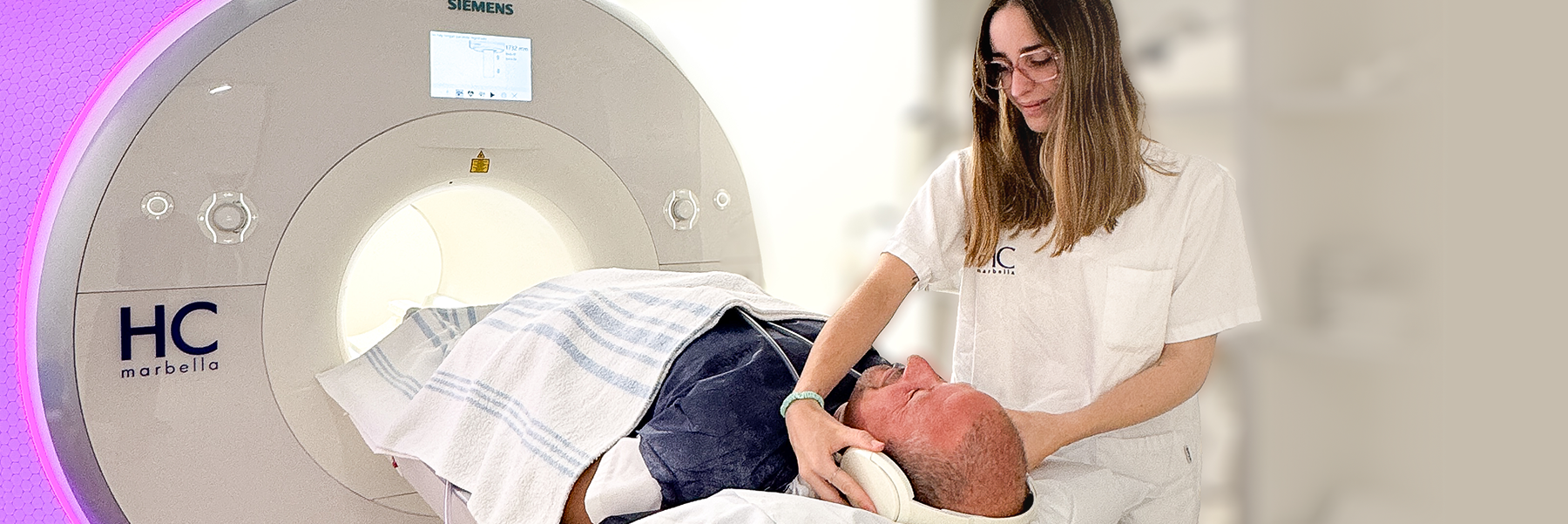
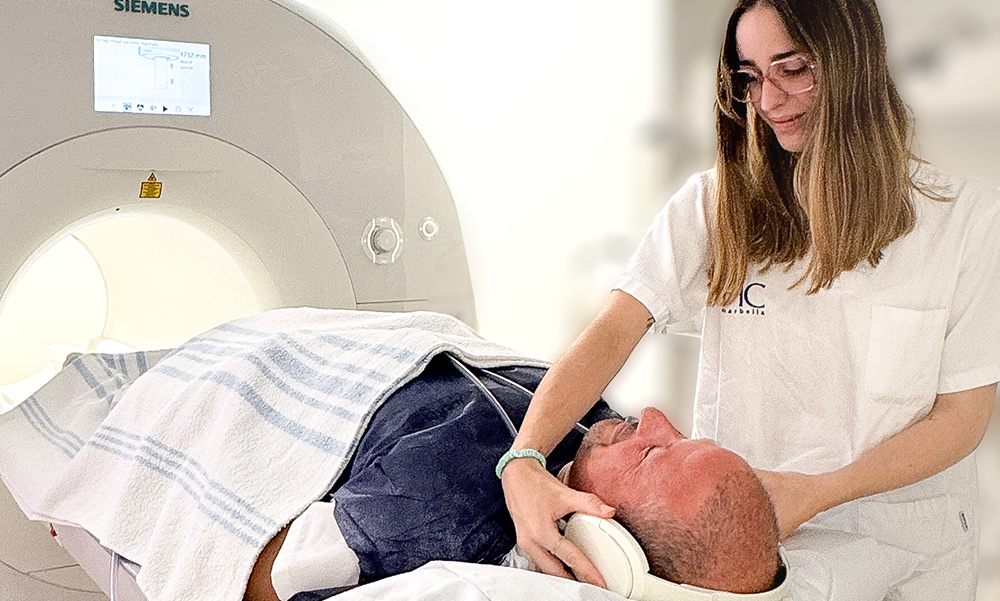
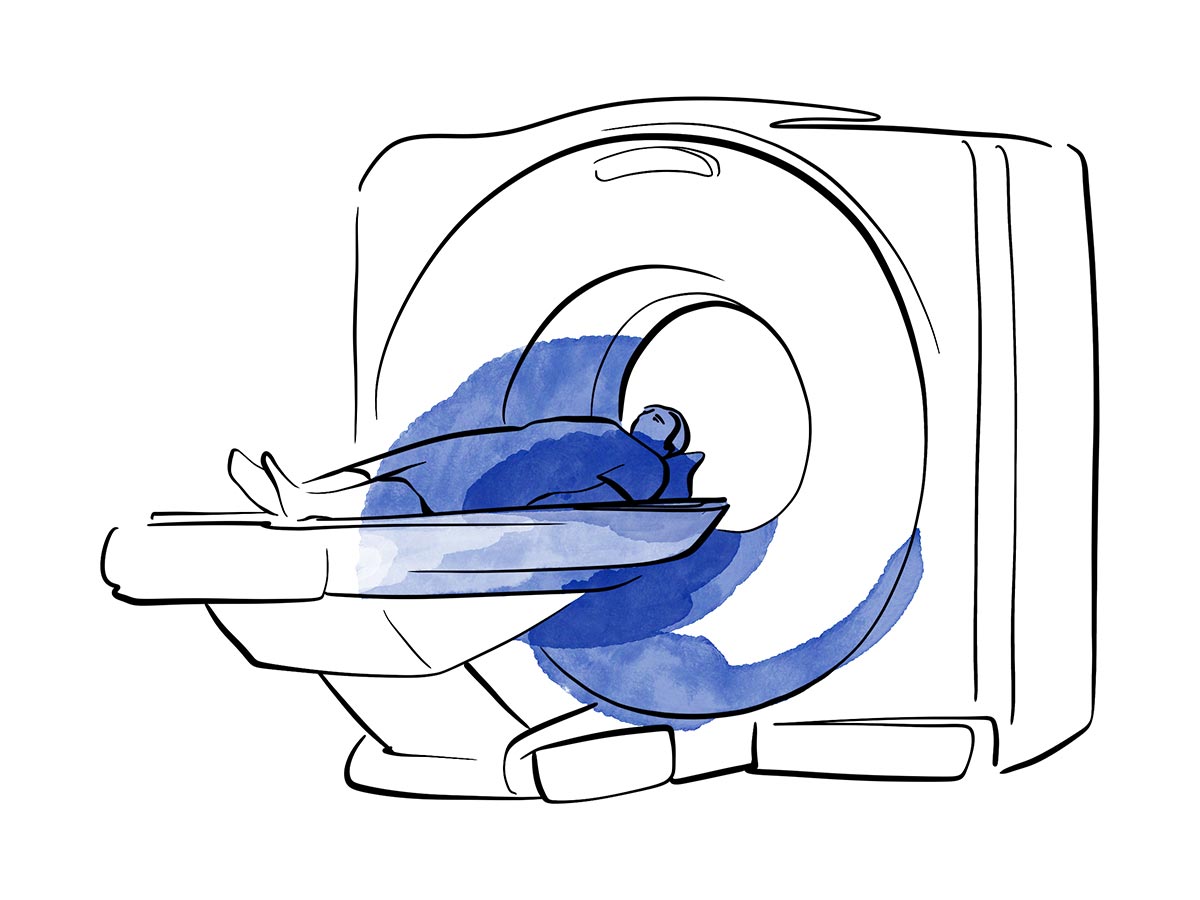
Multiparametric prostate MRI is an advanced scan that allows for a highly detailed examination of the prostate and the detection of any suspicious lesions.
It provides information on the size, location and characteristics of lesions, helping to determine whether a biopsy is necessary and to target it more precisely, avoiding unnecessary biopsies in many cases.
At HC Marbella, we perform this test using our 3-Tesla MAGNETOM Skyra MRI scanner, which offers the highest resolution currently available for this type of scan.
Multiparametric MRI combines different imaging techniques to examine the prostate from various angles, allowing for a highly detailed evaluation of both its structure and the behaviour of its tissues.
Thanks to these images, the specialist can differentiate more accurately between normal tissue and any suspicious areas.
It is a painless, non-invasive test that does not use radiation.
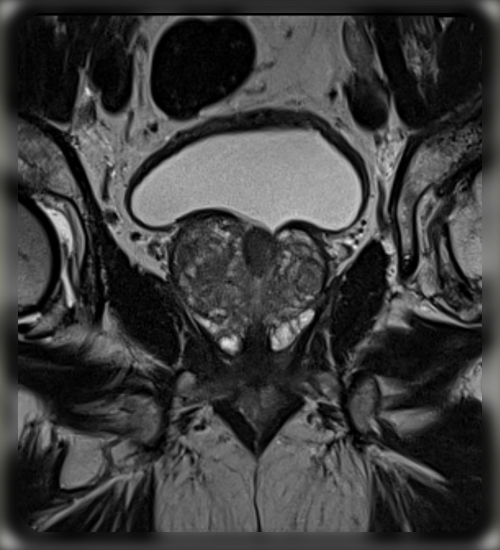
Multiparametric MRI allows physicians to:
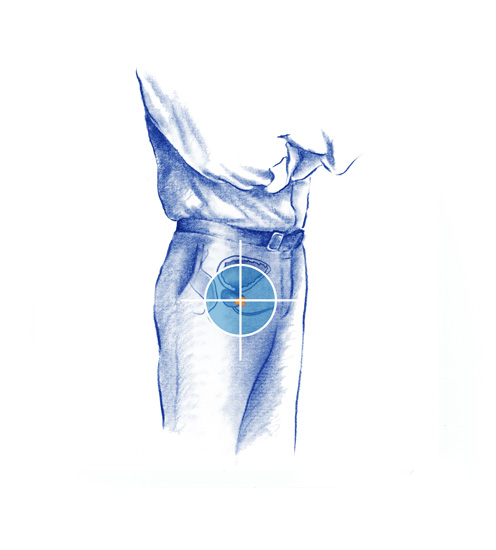
The specialist may request a multiparametric MRI in situations such as:
European guidelines recommend performing a multiparametric MRI scan prior to biopsy in patients with suspected localised disease.
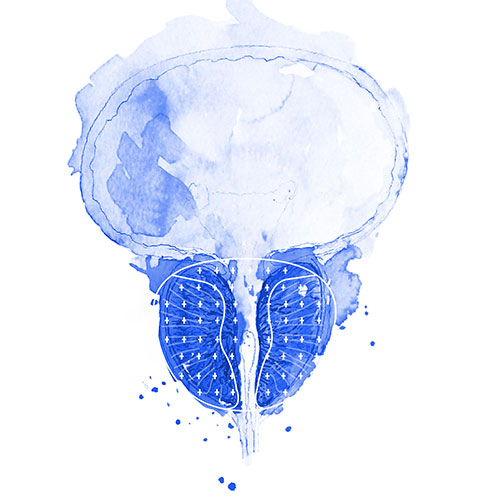
Traditionally, prostate biopsies were carried out by taking samples from different areas of the gland without knowing exactly where the lesion might be located.
Multiparametric MRI allows suspicious areas to be identified in advance. These images can then be combined with real-time ultrasound to perform a fusion-guided prostate biopsy, specifically targeting the areas highlighted on the MRI scan.
This helps to obtain more representative samples and reduces the possibility of a significant lesion being missed.
The results are interpreted using the international PI-RADS system, which classifies the level of suspicion of a lesion on a scale of 1 to 5.
The scale ranges from 1 to 5:
Important note: the PI-RADS result is not a diagnosis in itself. Your urologist will interpret it alongside your PSA level, medical history and other clinical factors before deciding on the next step with you. In selected patients, a result showing no suspicious lesions may even allow a biopsy to be avoided or postponed, continuing solely with PSA level monitoring.
You will lie inside the scanner while the images are taken. The scan is painless and usually lasts between 30 and 45 minutes. In some cases, an intravenous contrast agent may be administered.
Before the scan, it is important that you inform us if:
The Radiology team will provide you with specific preparation instructions when your scan is scheduled.
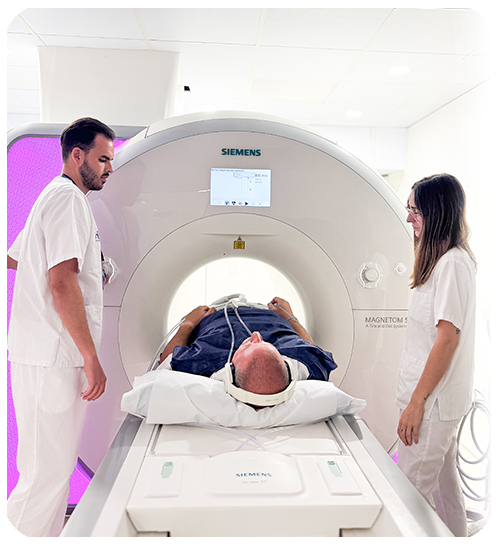
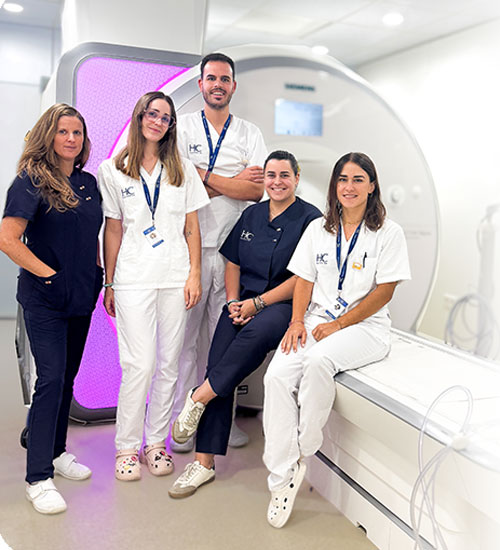
Technology makes an important difference, but it is our clinical team that turns it into a reliable diagnosis.
Not necessarily. PSA levels can rise for other reasons, such as benign prostatic hyperplasia or prostatitis. An MRI scan helps your urologist assess whether this increase is due to something that requires further attention.
It means the result is indeterminate; neither clearly benign nor clearly suspicious. Your urologist will assess this result alongside your PSA level and medical history to decide whether any further tests are required.
Preparation may vary depending on the protocol used. In some cases, you may be asked to fast for a few hours or to undergo bowel preparation to reduce the contents and gas in the rectum, as these can affect the quality of the images.
The HC Marbella team will provide all the necessary instructions when scheduling your appointment.
The scan usually takes between 30 and 45 minutes. It is important to remain still during this time to ensure high-quality images are obtained.
The radiologist will compile a detailed report setting out the findings and the PI-RADS classification of any potential lesions. The urologist will interpret the results alongside your PSA levels, medical history and other test results to decide whether monitoring, a targeted biopsy or any further investigations are required.

De Castro, Francisco Javier
Medical specialist in Radiology and Internal Medicine

Briones, Luis
HC Marbella Radiology Specialist

Bellinvia, Anna Alessandra
HC Marbella Radiology Specialist

Rebollo García, Natividad
HC Marbella Radiology Specialist
Subires Bootello, Marta.
HC Marbella Radiology Specialist

Rivera Sánchez, Ernesto
HC Marbella Radiology Specialist

Villar Luque, Luis
Especialista en Medicina Nuclear

García Baltar, José Antonio
Specialist in Hospital Radiophysics and Radiation Protection

Cano Iglesias, Enrique
Specialist in Hospital Radiophysics and Radiation Protection

Urbaneja Salas, Alberto
Specialist in Interventional Radiology

Rueda Galiano, Mª Isabel
Senior Technician in Diagnostic Imaging
Tel.: +34 952 908 628
+34 609 148 799
952908898 Oncology
951829978 Diagnosis by imaging
951829947 Gynecology
952908897 Fertility
951829947 Physiotherapy